
Why Water Pools on Driveways and Paths in Brisbane Homes
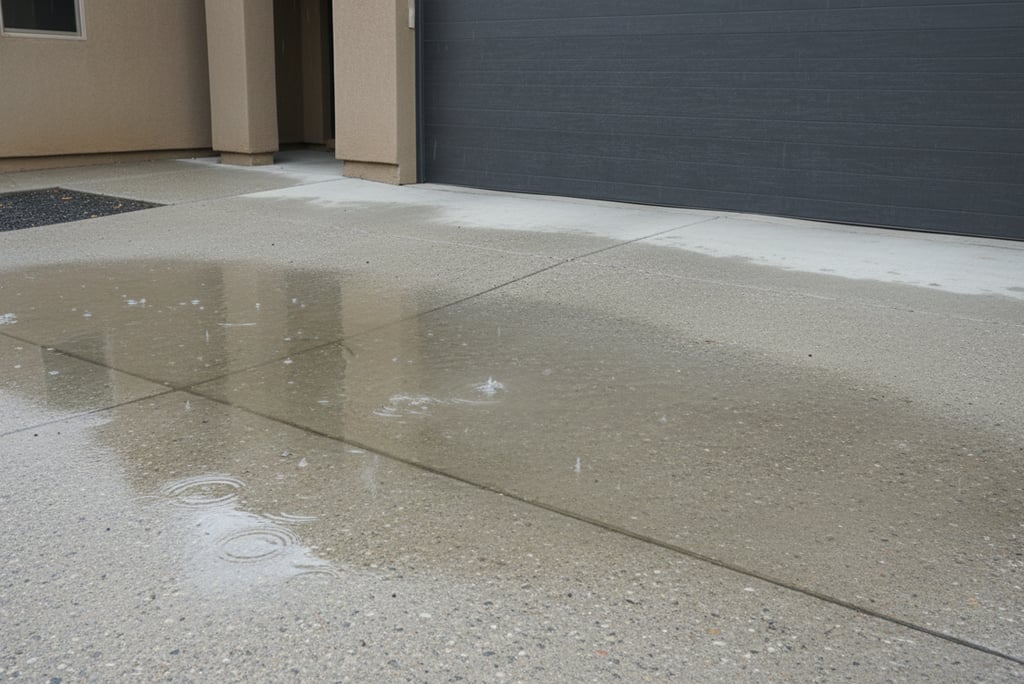
Water pooling on driveways and pedestrian paths after rain is one of the most common site complaints on Brisbane residential projects.
It is often described as:
water sitting on paved areas
puddles forming near garages or entries
paths staying wet long after rainfall stops
These issues are frequently treated as construction defects or drainage problems. In reality, driveway and path pooling is almost always designed in, not installed incorrectly.
Water pooling on driveways and pedestrian paths after rain is one of the most common site complaints on Brisbane residential projects.
It is often described as:
water sitting on paved areas
puddles forming near garages or entries
paths staying wet long after rainfall stops
These issues are frequently treated as construction defects or drainage problems. In reality, driveway and path pooling is almost always designed in, not installed incorrectly.
Why pooling is so common in Brisbane
Brisbane conditions place particular pressure on external paved surfaces.
Key contributors include:
short-duration, high-intensity rainfall
large hard-paved areas with limited absorption
modern preference for flatter external surfaces
tight level constraints on residential sites
Many driveways and paths are detailed assuming moderate rainfall and steady dispersion. Brisbane storm events regularly exceed those assumptions.
The difference between compliant fall and effective fall
A critical distinction is often missed at design stage.
Compliant fall refers to meeting minimum documentation or tolerance requirements.
Effective fall refers to whether water actually moves away under real conditions.
In practice:
construction tolerances reduce theoretical fall
paving joints and surface irregularities slow flow
water accumulates faster than it can disperse
What looks acceptable on drawings may behave very differently once built and exposed to storm events.
Flat architectural intent versus water behaviour
Many contemporary Brisbane homes prioritise:
flat driveways and paths
level transitions
minimal visual grading
While these outcomes are aesthetically desirable, they reduce the system’s tolerance for surface water.
When surface grading is minimal:
water spreads rather than sheds
flow paths become undefined
pooling becomes predictable during heavy rain
This is not a workmanship issue — it is a design intent conflict.
How driveway and path pooling creates downstream risk
Surface water does not exist in isolation.
Pooling on driveways and paths often contributes to:
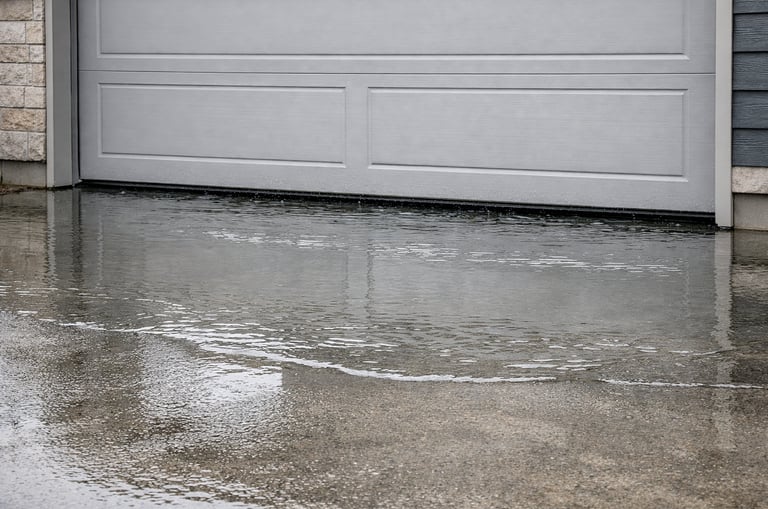
water reaching garage thresholds
water moving toward doorways
increased moisture at slab edges
secondary issues at internal–external interfaces
In many cases, threshold and doorway problems originate upstream, at driveway and path level decisions made early in the project.
Why retrofitting drains rarely resolves the cause
Once driveways and paths are constructed:
levels are fixed
surface geometry is locked in
flow paths are difficult to change
Retrofitted drainage may intercept some water, but:
accumulation often exceeds intake capacity
water still follows the same surface paths
the underlying fall issue remains
This is why pooling is often described as “intermittent” or “only during heavy rain” — the behaviour was always present.
During intense rainfall:
water volumes increase rapidly
surface dispersion is overwhelmed
shallow depressions become collection points
Designs that perform acceptably during light rain often fail during Brisbane storm events because they were never intended to manage that level of surface water.
When pooling is effectively unavoidable
Pooling becomes difficult to avoid when:
site constraints limit achievable fall
level transitions are tightly controlled
large paved areas drain toward structures
aesthetic priorities override water movement
In these situations, understanding where water will go is more important than assuming it will simply disappear.
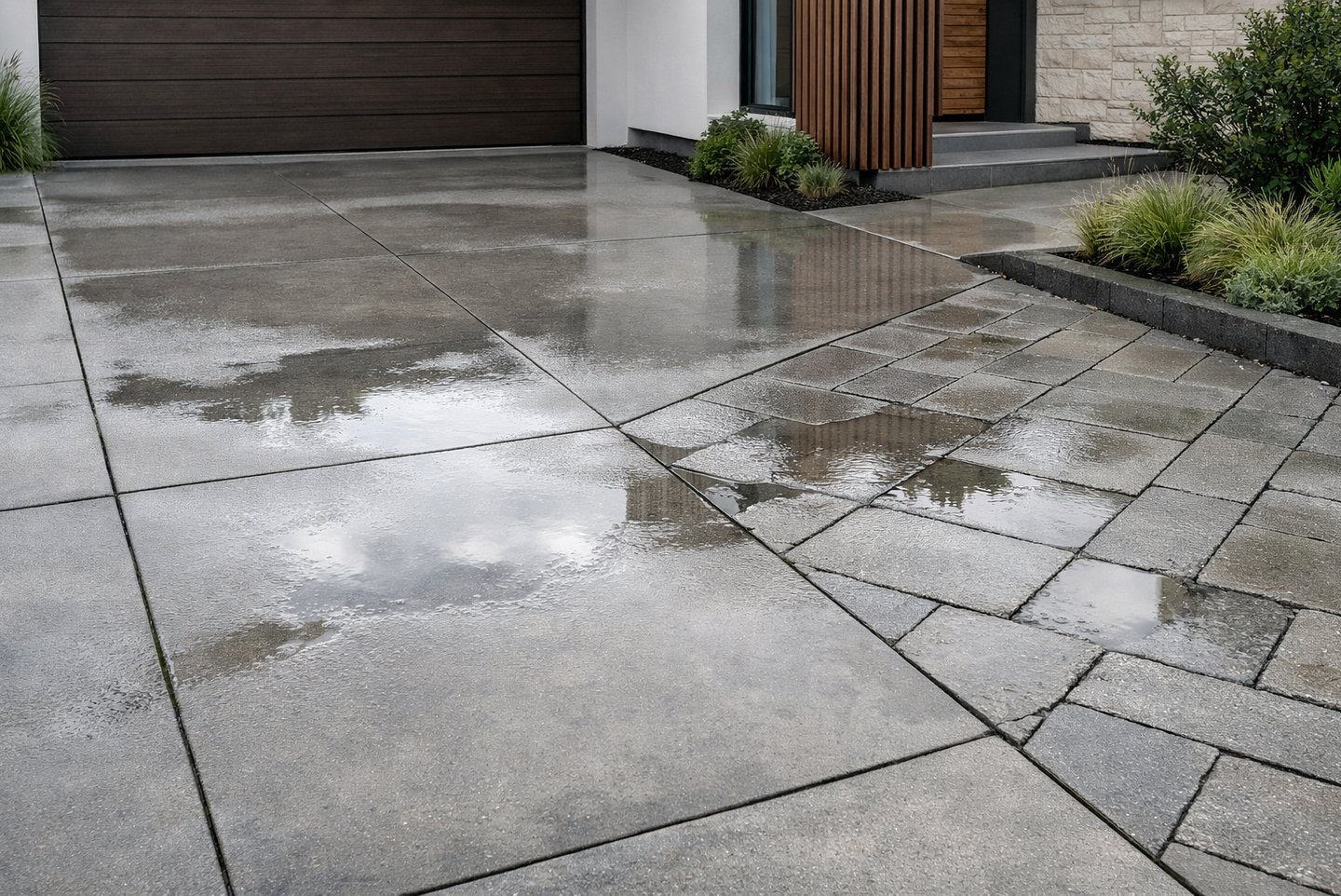
Brisbane storm events expose design assumptions
The value of design-stage review
Driveway and path pooling is easiest to address:
before slab and driveway levels are finalised
while external surface grading is still flexible
during coordination of site levels and thresholds
At this stage, small adjustments can significantly change water behaviour. After construction, options are limited and often compromised.
A quiet but important pattern
Pooling issues are rarely catastrophic at first.
They usually present as:
occasional puddling
water lingering after rain
minor inconvenience
Over time, these conditions often become contributors to larger water management problems elsewhere on the site.
Recognising the behaviour early is the key difference between prevention and rectification.
Further guidance
This article explains why water commonly pools on driveways and paths in Brisbane homes.
For design-stage guidance on managing surface water across driveways and pedestrian areas — including level relationships, effective falls, and Brisbane-specific rainfall behaviour — see:
Water Pooling on Driveways and Paths – Brisbane QLD
Contact
info@queenslandwateradvisory.com.au